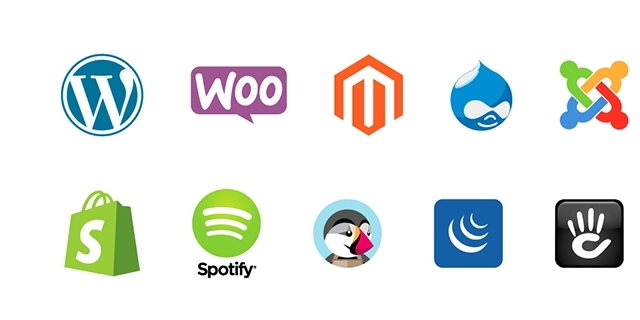
Top Content Management Systems for Websites & Blogs:
- WordPress
- Shopify
- Wix
- Joomla
- Drupal
- Magento (Adobe Commerce)
- Squarespace
- Ghost
- Contentful
- Strapi
WordPress is the most widely used CMS in the world, powering over 40% of websites. It offers thousands of themes and plugins, making it highly customizable.
Used in: Blogs, business websites, eCommerce, portfolios.
Shopify is a leading CMS for eCommerce websites. It provides an all-in-one solution for creating, managing, and scaling online stores without needing technical skills.
Used in: Online stores, dropshipping businesses.
Wix is a beginner-friendly CMS with drag-and-drop functionality. It allows users to build websites quickly without coding knowledge.
Used in: Personal websites, small business sites.
Joomla is a flexible CMS that balances ease of use and advanced functionality. It supports complex websites and multilingual content.
Used in: Corporate websites, portals, government sites.
Drupal is a powerful CMS known for its security and scalability. It is often used for large, complex websites with high traffic.
Used in: Enterprise websites, government platforms.
Magento is a robust CMS for large-scale eCommerce businesses. It offers extensive customization and powerful features for online stores.
Used in: Large eCommerce platforms, enterprise retail.
Squarespace is a design-focused CMS that provides beautiful templates and an easy-to-use interface for building modern websites.
Used in: Portfolios, creative websites, small businesses.
Ghost is a lightweight CMS designed specifically for blogging and publishing. It focuses on speed and a clean writing experience.
Used in: Blogs, newsletters, content publishing.
Contentful is a headless CMS that allows developers to manage content via APIs. It is widely used for modern web and mobile applications.
Used in: Apps, headless websites, omnichannel content delivery.
Strapi is an open-source headless CMS that gives developers full control over content APIs. It is highly customizable and developer-friendly.
Used in: Custom web apps, APIs, modern frontend frameworks.